Seeing is believing: what an eight-week pilot delivers
Simone Timman of Ergatis shares what remains of the healthy scepticism after an eight-week pilot with voice-driven documentation.
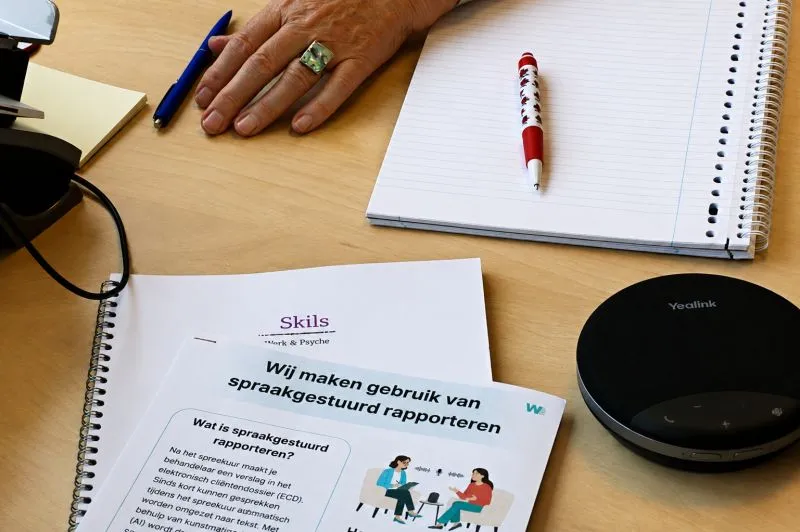
“Seeing is believing.” With voice-driven documentation, that is almost always the starting point, and rightly so: many healthcare professionals tried something years ago that did not work. Simone Timman of Ergatis shared what remains of that scepticism after an eight-week pilot. For those who are new to the topic, here is some context on a few of the points she raised.
Those last few per cent are not a shortcoming
The last few minutes remain the professional check: is the interpretation correct, is the nuance captured properly, is this what I want to sign? A system that takes away that step also takes away responsibility. That is exactly what you do not want in healthcare.
The gains are in the templates, not the technology
Speech recognition has largely become a commodity. The difference lies in the prompts, the customisation and the templates that match how a specific healthcare professional works and what the profession requires. That is why projects like this are never plug-and-play, and why we fine-tune things together with practitioners rather than in advance at the office.
Long and complex conversations deliver the most
In a short consultation, the time saved is modest. In an hour-long intake, with a lot of context and multiple goals, the difference is greatest.
And the gain is rarely just time
Less multitasking, less cognitive load, a better working posture and full attention for the client. That is what healthcare professionals mention most often after a pilot, even more often than the minutes saved.
Thinking about a pilot of your own? Request a demo.